
AI Guardrails for Secure AI-Driven Software Development
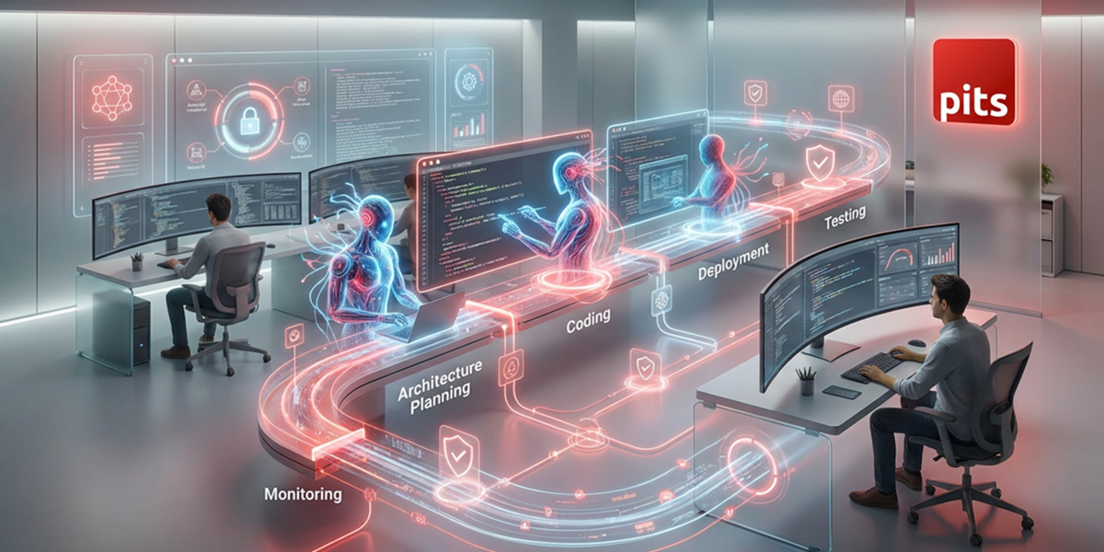
From waterfall to Agile to DevOps, every evolution in software development has focused on building better software faster. At PIT Solutions , we see this evolution as more than just a change in methodology - it represents a transformation in how software itself is created. But one thing never changed: developers did the work, and tools assisted. That arrangement is now breaking down.
AI agents have moved from autocomplete to autonomous collaborators. They design systems, write production code, run tests, and monitor live applications. This is the shift from SDLC to the Agentic Development Lifecycle (ADLC) - by AI Guardrails and it demands both ambition and discipline.
Why Traditional SDLC Is Being Disrupted
The traditional SDLC - plan, design, build, test, deploy, maintain - provides structure but struggles with modern demands. Sequential handoffs create bottlenecks. Testing happens too late. Feedback loops take weeks. Specifications are often vague, and code review quality varies with reviewer availability. These are systemic issues that compound at scale.
AI agents are now capable of addressing these problems - not by patching individual steps, but by reimagining the entire lifecycle.
What Is the Agentic Development Lifecycle?
ADLC is not SDLC with AI bolted on. It is a fundamentally different model. In SDLC, humans do the work and tools assist. In ADLC, agents do the work and humans govern. Developers shift from writing every line of code to defining goals, crafting specifications, orchestrating agents, and evaluating outcomes.
In SDLC, the developer is the driver. In ADLC, the developer is the navigator - deciding where to go and course-correcting, while agents handle the driving.
The ADLC follows a structured but dynamic flow where stages feed into each other and continuous feedback loops enable self-correction.
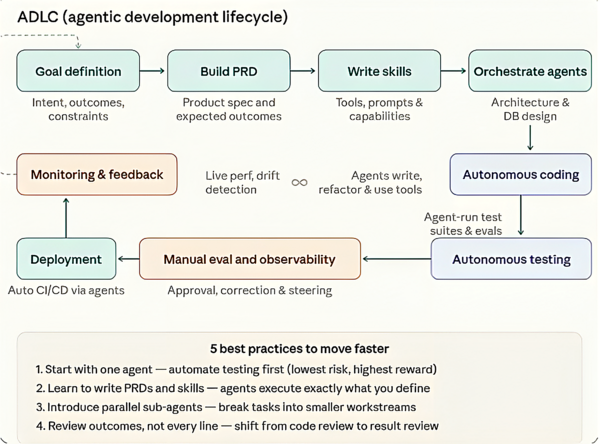
Figure 1: The Agentic Development Lifecycle -goal definition through continuous monitoring
How ADLC Works: Stage by Stage
Goal Definition
Establish intent, outcomes, and constraints. Clear goals are the foundation every agent decision traces back to.
Build PRD
Create a structured product spec with expected outcomes. This behaviour-oriented artifact guides all downstream agent activity.
Write Skills
Define tools, prompts, and capabilities agents will use. Well-defined skills produce consistent, repeatable results.
Orchestrate Agents
Assign multiple agents to work in parallel on architecture, coding, and design — breaking free from sequential handoffs.
Autonomous Coding
Agents write, refactor, and optimise code with full codebase context, building coherent integrated features.
Autonomous Testing
Testing runs continuously alongside coding. Agents run suites, catch regressions, and validate edge cases in real time.
Manual Eval & Observability
Engineers review outputs, approve changes, and steer corrections. This is the governance checkpoint.
Deployment
Automated CI/CD pipelines push validated changes with human-configured approval gates.
Monitoring & Feedback
Real-time performance monitoring and drift detection feed back into the loop, enabling agents to self-correct.
Six Key Shifts: SDLC vs ADLC
The contrast between the two models touches every dimension of how software gets built:
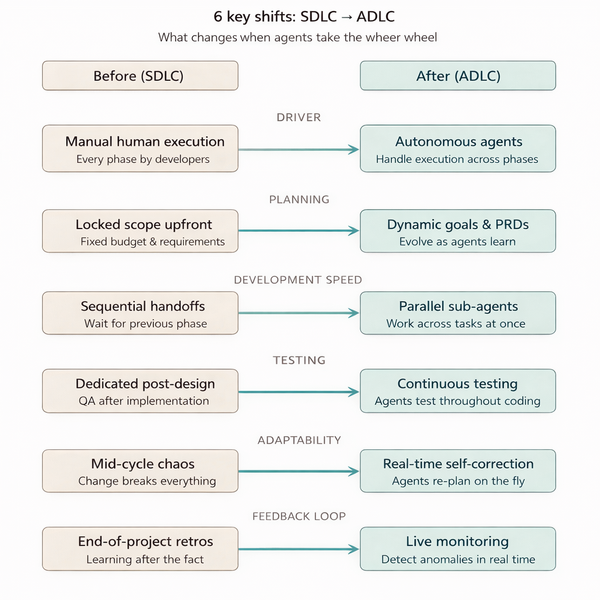
Figure 2: Six key shifts when moving from SDLC to ADLC
Dimension
SDLC
ADLC
Driver
Every phase manually executed by developers
Agents autonomously handle execution across phases
Planning
Scope and requirements locked upfront
Goals and PRDs evolve dynamically as agents learn
Speed
Sequential - each phase waits for the last
Parallel sub-agents work across tasks simultaneously
Testing
Dedicated QA phase after implementation
Continuous testing throughout coding
Adaptability
Mid-cycle changes trigger rework
Agents re-plan and self-correct in real time
Feedback
Retrospectives at end of project
Live monitoring detects anomalies instantly
The productivity gains from ADLC are real. But without guardrails, AI adoption creates fragmentation, inconsistent quality, and security risks. The guardrails that matter:
Why AI Guardrails Are Non-Negotiable
Security
AI-generated code must pass automated vulnerability scans. Agents need permissioned, auditable access to internal systems.
Quality control
Automated reviews, static analysis, and test coverage thresholds apply equally to agent and human code.
Prompt governance
Centralised prompt libraries ensure consistent outputs across teams. Without this, every developer runs a differently configured AI.
Observability
Full visibility into agent decisions, code generation, and system interactions. Every action logged and auditable.
Spec-driven development
Structured specifications before code create the common language between human intent and agent execution.
The organisations that win are not the ones using the most AI. They are the ones using AI with the most discipline.
How ADLC Transforms Developer Roles
ADLC does not replace developers. It elevates them. Engineers shift from writing boilerplate to:
- Defining architecture and making high-impact design decisions
- Writing precise specifications agents execute against
- Orchestrating and supervising AI agent workflows
- Reviewing outputs for quality, security, and alignment
- Focusing on creative problem-solving and strategic decisions
The result: faster delivery, higher code quality, accelerated onboarding, and engineering teams operating at a significantly higher level of impact.
Five Practical Steps to Get Started
Start with testing.
Automate testing first - lowest risk, highest reward entry point.
Invest in specifications.
Agents execute what you define. Precision in PRDs directly determines output quality.
Introduce parallel agents.
Break one feature into three workstreams, assign an agent to each, and observe.
Shift review habits.
Review outcomes and edge cases, not every line of code.
Build guardrails first.
Establish security, prompt governance, and observability before scaling adoption.
The Future Is Collaborative and Governed
The future of software engineering will be collaborative: humans and AI agents working together, each contributing what they do best. Humans bring judgement, creativity, and strategic thinking. Agents bring speed, consistency, and tireless execution at scale by AI Guardrails.
At PIT Solutions, we are actively implementing AI-driven development methodologies across our projects. We are convinced that organisations combining AI automation with strong governance will define the next era of software engineering.
The question is no longer whether AI will transform how software is built. It is whether your organisation will lead the transformation or follow it.
The era of static SDLC is ending. The Agentic Development Lifecycle is here-and it demands speed, intelligence, and bold leadership. Step into the future with PIT Solutions today!